A component-by-component look at what separates a $500 commuter from a $900 one and a $1,500 one, plus what to check before buying used.
Price tiers separate on the spec sheet, and most of the separation sits in parts you cannot judge from ten feet away. Two bikes can share a frame shape, a tire width, a rack mount and a paint finish, and still differ by four hundred dollars because one has sealed cartridge bearings in the hubs and hydraulic brakes and the other does not. The frame gets the marketing. The bearings, the brake calipers and the fork decide whether the bike is still pleasant to ride in its third winter. Read the component list line by line, and treat any line that says only the manufacturer's own house brand as an unknown.
Around $500, and what the shop had to leave out
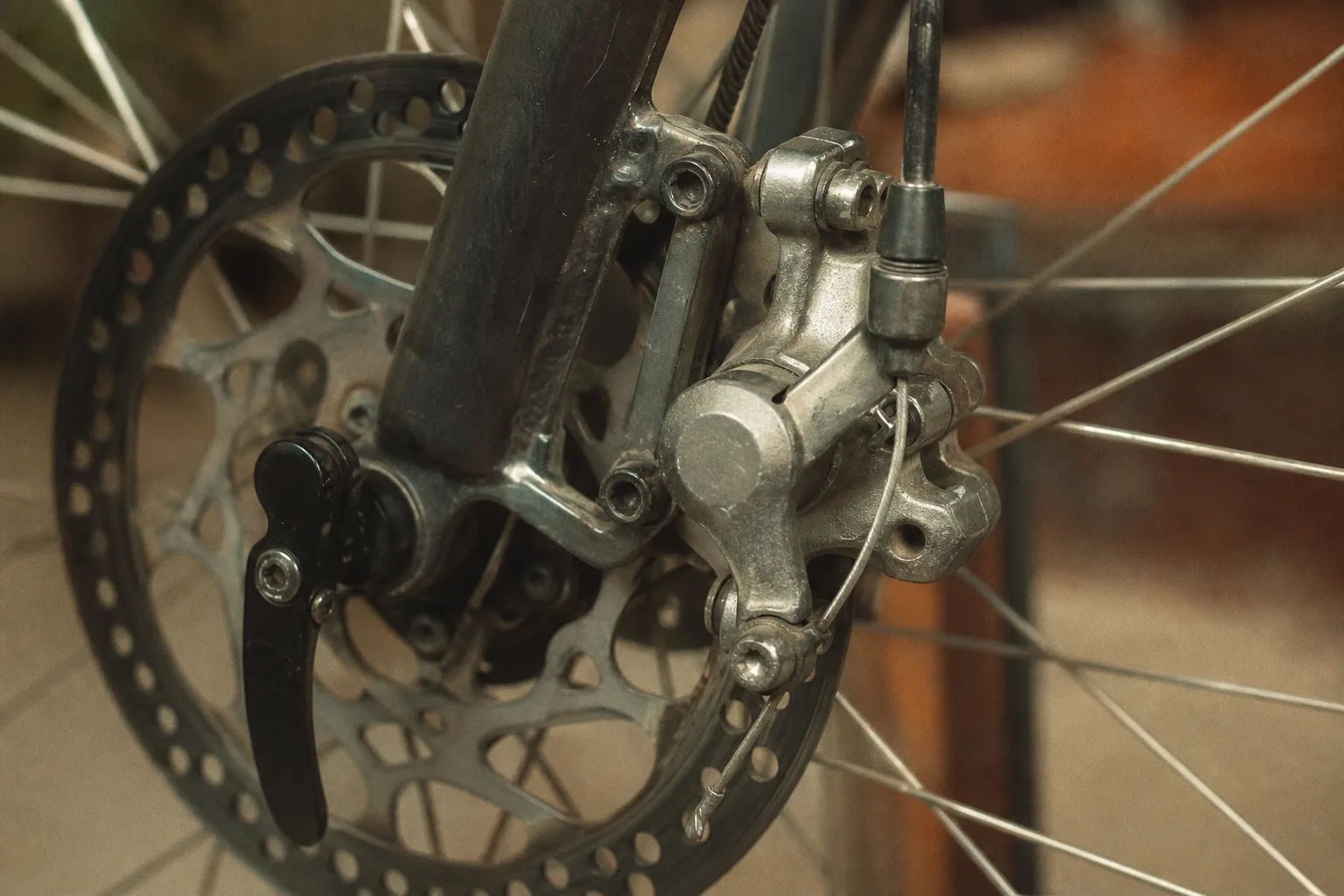
At this level you are usually looking at a Shimano Tourney or Altus drivetrain, cable-actuated disc brakes from Tektro or Promax, a steel fork, and hubs described on the spec sheet by nothing more specific than "alloy." That vagueness is the tell. Unbranded hubs are often loose-ball with cup-and-cone adjustment and modest grease, which is serviceable if you are willing to service it, and gritty by spring if you are not. Wheels at this price are machine-built and rarely stress-relieved, so budget for a tensioning session in the first few months. None of this makes the bike unsafe. It makes it a bike that rewards attention.
The $900 jump, which is mostly brakes and bearings
The extra four hundred dollars buys three things that show up on every ride. Hydraulic disc brakes, commonly Shimano's MT200 or a Tektro equivalent, replace cable discs: they self-adjust as the pads wear, need one finger instead of three in the rain, and stop dragging every time the cable housing picks up water and grit. Sealed cartridge bearings appear in the hubs and often the bottom bracket, which means the wheel that spun quietly in the shop still spins quietly a year later. The fork usually goes aluminum or better-butted steel, taking a pound or more off the front end. Shifting moves up to Acera or Alivio, which matters less than the other two.
Where more money stops changing your commute
Past roughly $1,200, the money goes into weight and drivetrain grade, and neither does much for a four-mile ride with a pannier of groceries. Deore instead of Alivio shifts a little crisper and lasts a little longer. A carbon fork saves half a pound you will not notice under a full rack. What does still earn its price at $1,500 is equipment that removes a maintenance job: an internally geared hub such as a Shimano Nexus, a belt drive instead of a chain, a dynamo hub wired to a permanent front light, and puncture-resistant tires fitted from new. The Consumer Product Safety Commission is responsible for the safety requirements bicycles sold here have to meet, so the baseline is the same across all three tiers. Above that baseline, you are buying durability and convenience, not speed.
Buying used, and the eight minutes that tell you everything
A three-year-old $1,500 bike often sells for what a new $700 bike costs, and it is usually the better purchase if you check it properly. Lift the front wheel and rock it side to side at the rim to feel for hub play, then do the same at the rear. Hold the front brake and push the bike forward: a knock means a loose or pitted headset. Run a chain checker along the chain, because a worn chain that has been ridden hard takes the cassette and chainrings with it, and that is a real repair bill. Look for cracks where the tubes meet, for a seatpost that has seized, and for rotors worn thin. Ask for the serial number in advance and run it through a stolen bike registry before you go.
The useful question is not which tier is best but which line on the spec sheet you would be paying to fix later. Hydraulic brakes and sealed hubs are the two that repay the money on an everyday bike, and they are usually settled somewhere between $700 and $900. Everything above that is a choice about how much maintenance you want to do yourself.